For many shipowners and offshore project contractors, the biggest concern when selecting a cooling system is not the cooling capacity itself — it is whether the equipment can survive the environment.
High salt concentration, humid air, continuous vibration, and 24-hour operation create conditions that are far more demanding than ordinary industrial factories. A standard chiller that performs well indoors may begin showing corrosion, electrical instability, or efficiency loss within a surprisingly short time after being deployed offshore. So, can marine chillers really operate reliably in these conditions?
From our experience at Hengde Chiller, the answer is yes — but only if the system is designed specifically for marine environments rather than simply adapted from a standard industrial chiller.
Salt Air Damages Equipment Faster Than Many Users Expect
One thing many first-time marine project buyers underestimate is that salt corrosion does not only affect the external metal casing.
In reality, salt-laden air slowly enters almost every part of the system, including electrical terminals, condenser fins, copper joints, fan motors, and even sensor connections. Over time, this can create oxidation layers that reduce conductivity and cooling efficiency.
In many offshore projects, the earliest failures are often not compressors or refrigerant systems — they are small electrical connection points and terminals that gradually corrode because of moisture mixed with salt particles. This is why professional marine chillers usually place heavy focus on electrical protection, not just refrigeration performance.
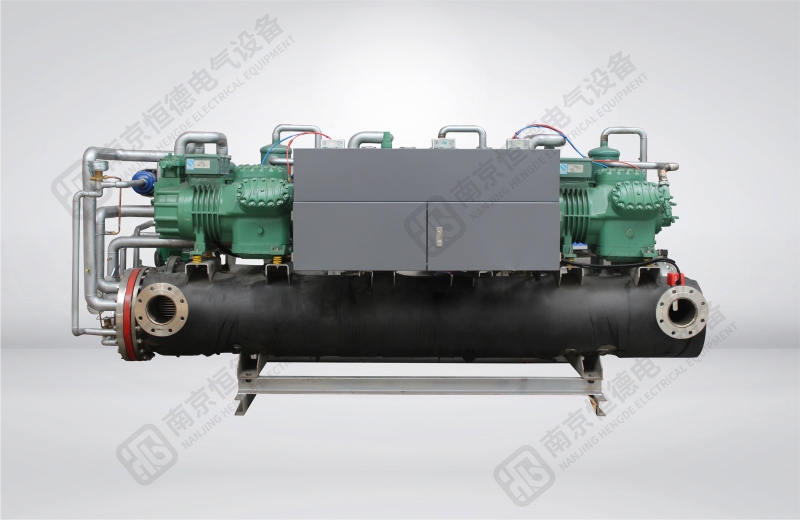
At Hengde, marine chillers are typically equipped with:
- Corrosion-resistant structural materials
- Protective coatings for metal components
- Moisture-resistant electrical cabinet design
- Reinforced piping protection
- Stable control systems for continuous operation
These details may seem minor during purchasing, but they become critical after several months of offshore use.
Humidity Is Sometimes More Dangerous Than Seawater
Most people immediately think about seawater corrosion when discussing marine cooling systems. However, in practical operation, humidity itself can become an even bigger hidden risk.
When humid air enters electrical cabinets and meets temperature differences caused by cooling systems, condensation can form inside the equipment. Once moisture accumulates on electrical components, unstable signals and unexpected shutdowns may occur.
In coastal environments, repeated condensation inside electrical cabinets is often more harmful than occasional seawater exposure because operators may not notice the issue until electrical faults begin appearing intermittently. This is one reason marine chillers require better sealing and ventilation design compared with standard industrial chillers.
Humidity Is Sometimes More Dangerous Than Seawater
Most people immediately think about seawater corrosion when discussing marine cooling systems. However, in practical operation, humidity itself can become an even bigger hidden risk.
When humid air enters electrical cabinets and meets temperature differences caused by cooling systems, condensation can form inside the equipment. Once moisture accumulates on electrical components, unstable signals and unexpected shutdowns may occur.
In coastal environments, repeated condensation inside electrical cabinets is often more harmful than occasional seawater exposure because operators may not notice the issue until electrical faults begin appearing intermittently. This is one reason marine chillers require better sealing and ventilation design compared with standard industrial chillers.
Stable Operation Matters More Than Extreme Cooling Capacity
Some buyers focus heavily on achieving the lowest possible temperature. But in marine applications, stability is usually more important than extreme cooling performance. A marine chiller running continuously at moderate, stable conditions will generally outperform a system constantly pushed near its maximum operating limit.
For offshore projects, slightly oversized chillers often achieve longer service life because the compressor operates under lower stress during continuous operation. This is especially important on vessels or offshore platforms where maintenance opportunities are limited.
At Hengde, many customers prefer customized marine chillers with operating margins built into the design, especially for tropical coastal regions where ambient temperatures and humidity remain high year-round.
Vibration Is an Overlooked Problem Offshore
Unlike factory installations on stable concrete floors, marine chillers often operate under constant vibration caused by engines, waves, and platform movement. Over time, vibration may loosen piping connections, damage support brackets, or increase mechanical wear.
In real marine installations, poor piping support design can sometimes create more long-term reliability problems than the refrigeration system itself. Because of this, marine chillers often require reinforced internal structures and vibration-resistant installation methods.
Common Marine Chiller Applications
Today, marine chillers are widely used in:
- Ship engine cooling systems
- Offshore drilling platforms
- Hydraulic equipment cooling
- Seawater desalination projects
- Seafood processing plants
- Coastal chemical facilities
- Marine battery cooling systems
Different projects require different cooling capacities, anti-corrosion levels, and voltage standards, which is why customized solutions are becoming increasingly common in the marine industry.
As a professional manufacturer, Hengde supports OEM and ODM marine chiller solutions based on customer installation space, operating conditions, and environmental requirements.
FAQ
FAQ 1: Can marine chillers use seawater directly?
Yes, but special materials are usually required. Standard condensers may corrode quickly when exposed directly to seawater. For seawater cooling applications, titanium heat exchangers or specially treated corrosion-resistant condensers are commonly recommended.
FAQ 2: Do marine chillers require more maintenance?
Generally, yes. Marine environments are naturally harsher than indoor industrial environments. However, properly designed marine chillers can still maintain long-term stable operation if operators regularly:
- Clean heat exchangers
- Check anti-corrosion coatings
- Inspect electrical connections
- Remove salt buildup
- Monitor refrigerant conditions
Preventive maintenance is especially important for offshore equipment because emergency repairs at sea are significantly more expensive.
Real Project Case: How Hengde Helped a Maldives Customer Solve Fishing Vessel Cooling Problems
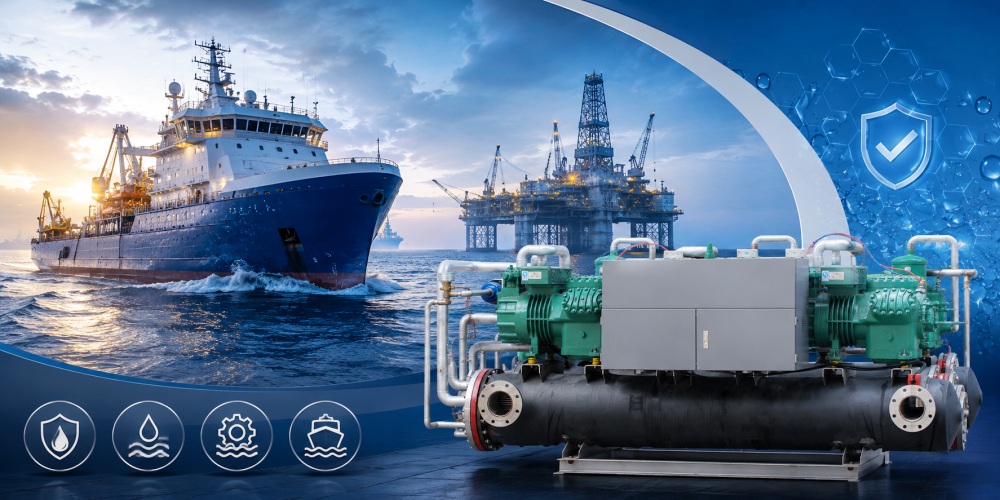
Hengde worked with a customer from the Maldives who operated several local fishing vessels. The customer originally used conventional industrial chillers purchased through a local supplier, but after less than a year of operation, multiple problems began appearing.
The biggest issues included:
- Severe corrosion on condenser fins
- Frequent electrical alarms during humid weather
- Unstable cooling performance after continuous operation
- Rust around piping connections and mounting structures
Because the vessels operated in high-salt seawater environments almost every day, the standard chillers simply could not withstand the local conditions. After discussing the operating environment with the customer, Hengde redesigned the system specifically for marine use. The upgraded solution included:
- Enhanced anti-corrosion protection
- More suitable condenser materials for coastal operation
- Reinforced electrical cabinet sealing
- Improved vibration resistance for onboard installation
- More stable temperature control during continuous sailing operations
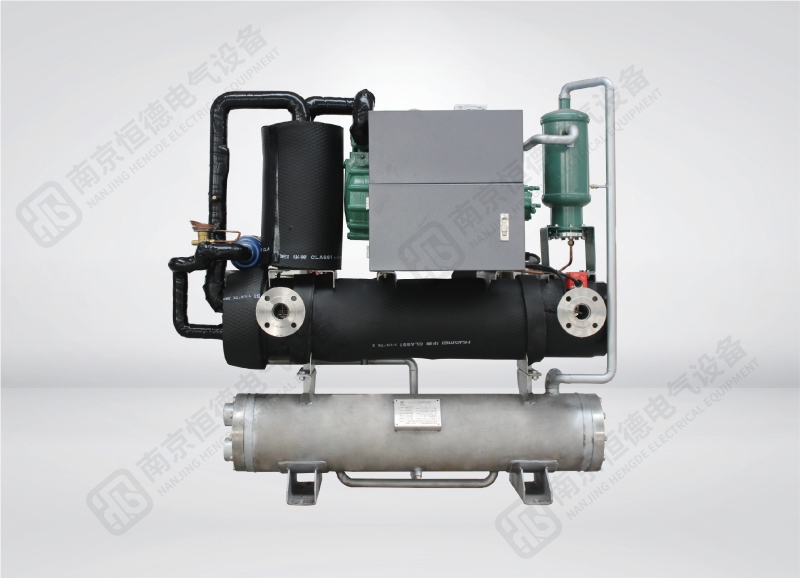
For marine applications like fishing vessels, space is always extremely limited. In many cases, the design of a marine chiller has to be significantly more compact than land-based industrial chillers. This is not just an aesthetic choice — it is a practical requirement driven by ship layout constraints, where every cubic meter of space directly affects storage capacity and operational efficiency. After the new marine chillers were installed, the customer reported much more stable operation during daily fishing activities, especially during long working hours in tropical weather conditions.
For marine projects, real reliability does not come from having the most complex system. It comes from understanding how offshore environments and vessel limitations gradually affect equipment design — and optimizing the system from the start around those realities.